<p>As a business grows, bookkeeping alone may stop giving the management team enough visibility. Transactions can be recorded correctly while questions about cash, margins, budgets and upcoming decisions remain unanswered. An <strong>outsourced finance function in India</strong> can bring those activities into a regular operating rhythm without requiring every role to be hired in-house from day one.</p>
<p>The useful question is not whether a provider offers “virtual CFO” support. It is what work will be completed, who owns each input, when reports will arrive and which decisions those reports should support.</p>
<h2>What an outsourced finance function can cover</h2>
<p>The scope should reflect the company’s size, systems and priorities. A growing business may need support across some or all of these areas:</p>
<ul> <li>reviewing the monthly close and unresolved reconciliations;</li> <li>preparing a management reporting pack with agreed performance indicators;</li> <li>maintaining a cash-flow forecast and highlighting upcoming pressure points;</li> <li>comparing actual results with budgets or forecasts;</li> <li>tracking receivables, payables, inventory or project profitability;</li> <li>coordinating finance tasks across internal staff and external specialists; and</li> <li>preparing information for management, lenders, investors or the board when included in the engagement.</li> </ul>
<p>These activities depend on reliable source records. If invoices, bank entries, payroll data or stock records arrive late, the reporting timetable will also move. A sound proposal should therefore explain both the provider’s work and the client team’s responsibilities.</p>
<h2>Bookkeeping, reporting and finance advice serve different needs</h2>
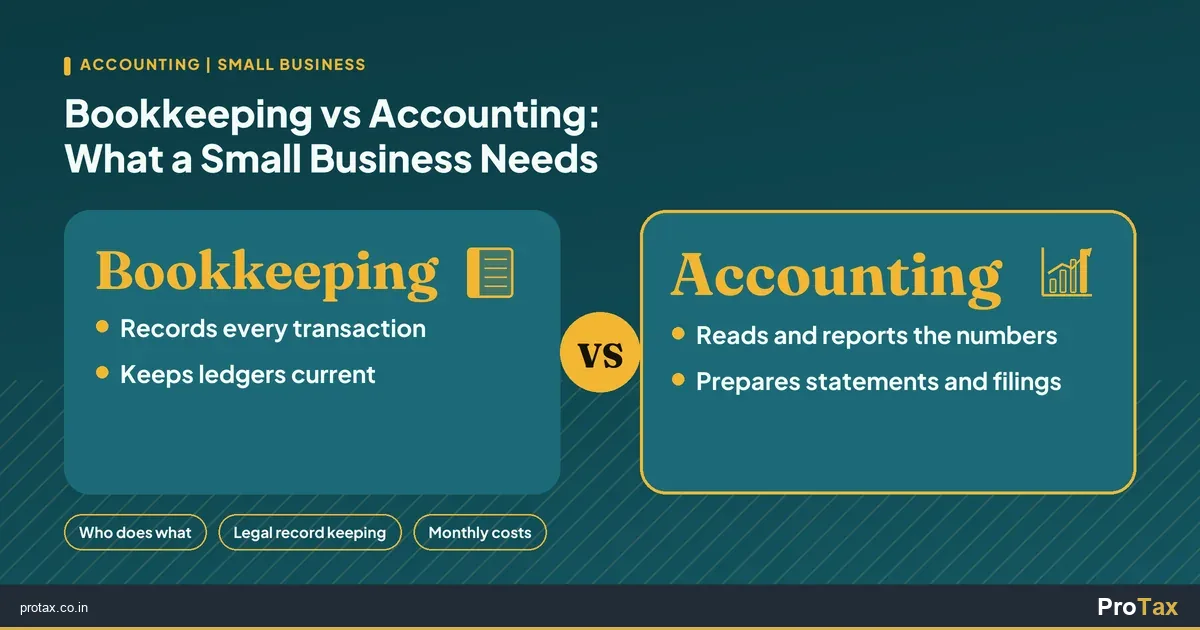
<p>Bookkeeping captures and organises financial transactions. Management reporting turns the underlying records into a consistent view of performance. Finance advice uses that information to examine options, risks and trade-offs.</p>
<p>A business may require all three, but they do not have to sit with the same team. What matters is a clear hand-off. The engagement letter or scope document should identify who posts entries, who completes reconciliations, who reviews the close, who prepares forecasts and who follows up on agreed actions.</p>
<p>Management remains responsible for commercial decisions. An adviser can help organise the evidence, test assumptions and present alternatives; they cannot guarantee a funding result, a profit improvement or a particular business outcome.</p>
<h2>Build the service around a monthly finance cycle</h2>
<p>A practical monthly cycle gives the engagement a working structure. It might look like this:</p>
<ol> <li><strong>Close the records.</strong> Complete the agreed reconciliations, identify missing documents and record material adjustments.</li> <li><strong>Review data quality.</strong> Check unusual balances, old receivables, cost allocations and other items that could distort the management view.</li> <li><strong>Prepare the reporting pack.</strong> Present the profit and loss account, balance sheet, cash position and selected operational indicators in a consistent format.</li> <li><strong>Refresh the forecast.</strong> Update assumptions for collections, payments, sales, costs and planned investments.</li> <li><strong>Hold the review meeting.</strong> Discuss material variances, decisions due and areas that need an owner.</li> <li><strong>Record actions.</strong> Note the person responsible and target date for each follow-up item.</li> </ol>
<p>The dates should be realistic. A shorter timetable has little value if the records are incomplete or the report needs several rounds of correction.</p>
<h2>Agree the deliverables before work begins</h2>
<p>Broad phrases such as “strategic finance support” leave too much room for different expectations. Ask for a schedule of deliverables that answers the following questions:</p>
<ul> <li>Which reports will be produced, and in what format?</li> <li>How soon after month-end will a draft and final version be available?</li> <li>Which entities, branches, products or projects are covered?</li> <li>How often will the cash forecast be updated?</li> <li>Which indicators and variance thresholds will be reviewed?</li> <li>How many review meetings and ad hoc discussions are included?</li> <li>Who can approve changes to assumptions or reporting definitions?</li> <li>How will confidential records be shared and access be removed?</li> </ul>
<p>Also state what sits outside the assignment. Statutory audit, legal advice, tax filings, company-secretarial work, fundraising execution and system implementation may require separate scopes or specialists. Writing down these boundaries helps the internal team route each issue correctly.</p>
<h2>Signs that a business may need broader finance support</h2>
<p>The need usually appears through recurring operating problems. Management may receive financial statements too late to act. Cash requirements may be discussed only when a payment is due. Department heads may use different definitions for the same metric. Budgets may exist in a spreadsheet but never be compared with actual results.</p>
<p>Other signs include rapid hiring, new locations, a more complex product mix, lender reporting requirements, preparations for investment or a founder spending too much time chasing routine finance information. These situations do not automatically justify a full outsourced function. They are prompts to define the missing capability and choose an appropriate level of support.</p>
<h2>Questions to ask a prospective provider</h2>
<p>Before appointing a provider, ask who will do the day-to-day work and who will review it. Request a sample reporting structure with fictional or redacted data. Discuss experience with businesses of similar complexity, the accounting systems the team can work with and the method used to track open items.</p>
<p>It is also worth asking how the engagement will change as the business develops. Some companies need a limited reporting review at first, then add budgeting, cash forecasting or finance-process coordination later. A modular scope can be easier to manage than a long list of services adopted at once.</p>
<h2>How ProTax Consultancy can support the finance rhythm</h2>
<p>ProTax Consultancy’s <a href="https://protax.co.in/services/business-advisory">Business Advisory & Virtual Finance service</a> can help a business define a workable reporting and review process around its actual requirements. The starting point should be a discussion of records, decision needs, responsibilities and deadlines. From there, the parties can document an appropriate scope and the information needed from the client team.</p>
<p>A well-defined outsourced finance arrangement should make responsibilities visible and reporting discussions more consistent. Its value comes from disciplined execution, usable information and clear ownership each month.</p>
<h2>Frequently asked questions</h2>
<h3>Is an outsourced finance function the same as hiring a CFO?</h3> <p>No single definition applies to every engagement. The outsourced scope may cover selected reporting, forecasting, controls and finance coordination, while executive authority and management decisions stay with the company. The contract should describe the actual responsibilities rather than relying on a job title.</p>
<h3>Can the service include bookkeeping and tax compliance?</h3> <p>It can if those activities are expressly included and the provider is equipped to perform them. Many businesses keep bookkeeping, tax compliance and finance advice in separate scopes, with agreed hand-offs between the teams.</p>
<h3>What should be prepared before the first review?</h3> <p>Gather the latest accounts, bank and ledger reconciliations, receivables and payables ageing, current budget or forecast, loan schedules, key contracts, payroll summaries and the management indicators already in use. The exact list will depend on the agreed assignment.</p>
<p><small>Photo: <a href="https://www.pexels.com/photo/a-person-using-a-laptop-while-in-a-meeting-7693733/">Yan Krukau on Pexels</a>, available under the Pexels licence.</small></p>