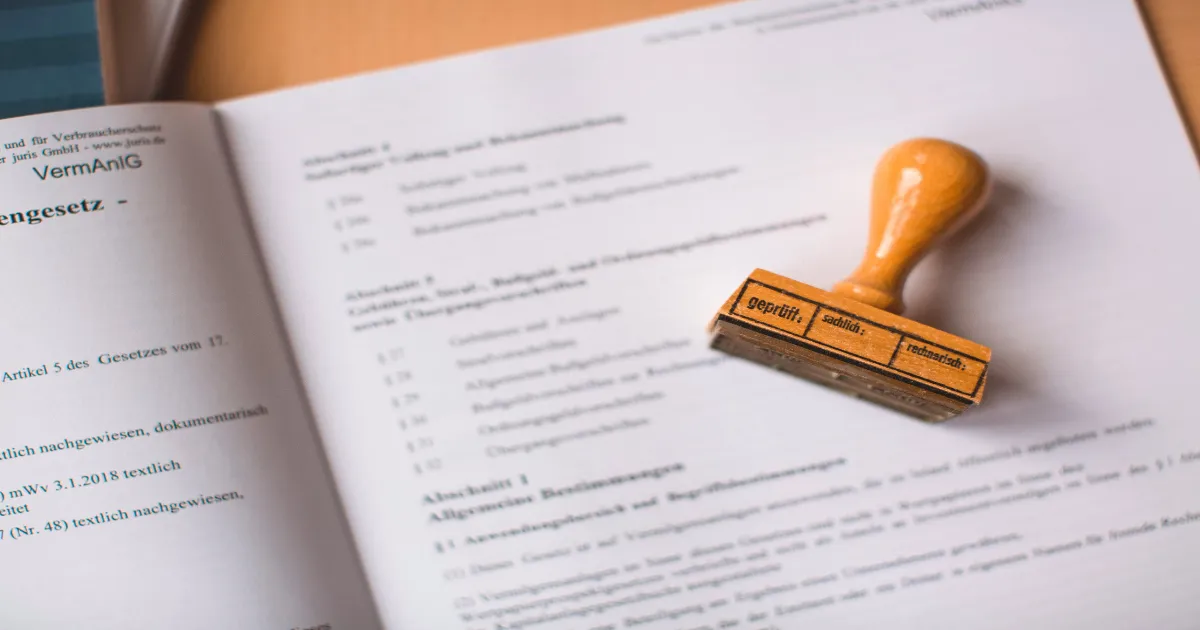
Spotted a mistake in your AOC-4 after filing it? Take a breath, this is fixable, but not the way most people expect. You usually cannot just open the form, edit it, and file it again. Once your AOC-4 is approved, the MCA V3 portal ordinarily will not accept another Original filing for the same financial year, and how you put it right depends on the appropriate legal or administrative process for that kind of error. Two things decide your route: how serious the error is, and whether the form is still under processing or already approved. There is no government fee for the correction step itself, though additional fees can apply on a fresh filing.
The MCA has not prescribed one statutory procedure that covers every type of AOC-4 correction. The appropriate course depends on the nature of the error, the status of the filing, and the practice followed by the jurisdictional Registrar of Companies. This guide explains the routes that are used in practice; it is general information, not legal advice for a specific case.
- Once approved, AOC-4 ordinarily cannot be refiled as an Original for the same year. The right route depends on the error type and the form's status.
- Still under processing or sent for resubmission? Correct and resubmit the same form within the timeline. No separate application.
- Minor clerical error? In some cases the ROC may permit a clarification to be placed on record through Form GNL-2, quoting the original SRN.
- Revising financial statements after adoption? Section 131 generally applies, and it needs NCLT approval before filing revised figures.
- Other significant error on an approved form? In practice, companies request the ROC to cancel the SRN (a discretionary process), then file a fresh AOC-4.
- Form GNL-2 is a supplemental clarification, not a cancellation or a replacement for AOC-4.
What Is Form AOC-4 and Why Can't It Be Freely Revised?
Form AOC-4 is the e-form through which a company files its financial statements with the Registrar of Companies (ROC) each year, and once it is approved you cannot simply edit AOC-4 after filing: the portal ordinarily will not allow another Original filing for the same financial year. Try to upload a corrected form and the portal generally returns an error saying a form has already been filed for that year.
Form AOC-4 is a statutory filing of a company's financial statements under Section 137 of the Companies Act 2013. It is due within 30 days of the annual general meeting (AGM), and it goes on the MCA public register, where it is relied on by regulators, lenders, and shareholders. Because these are audited statements on a public record, they cannot ordinarily be altered on the MCA register without following the prescribed legal process; the correct route to a correction is keyed to how serious the mistake is.
Form AOC-4 on the MCA V3 portal. The Type of Filing field near the top is where Original or Revised is selected.
The Registrar of Companies (ROC) is the MCA authority that administers company filings under the Companies Act 2013 and maintains the register of companies for each state. Corrections that touch an approved filing pass through the ROC, either as a clarification, a revised filing, or a cancellation request. Every company registered in India files AOC-4 annually, so an error in it is common, and knowing the right correction route matters more than panicking over the mistake.
What Kind of Mistake Did You Make?
Your first job is to work out whether the error is minor or significant, because that decides everything that follows. Spending 5 minutes on this now saves you from picking the wrong path and having to redo the whole thing later.
| Minor errors | Major errors |
|---|---|
| Typographical or spelling mistakes | Wrong financial figures in the statements |
| Small attachment errors | Incorrect shareholding details |
| Rounding differences | Wrong director details |
| A minor clarification to a single field | Wrong AGM date (must match MGT-7) |
For minor errors, the ROC may in some cases permit a clarification or supporting document to be placed on record through Form GNL-2. Major errors, and especially changes to financial statements, generally call for a formal revision or a cancellation of the original filing before a corrected one is accepted.
This is the point readers most often confuse. The availability of a filing option on the MCA V3 portal, such as the Revised option in AOC-4, does not by itself create a legal right to revise an approved filing. A company must satisfy the requirements of the Companies Act 2013 and any applicable MCA process before using a revised filing. Treat the portal field as a facility that can be used where the law permits, not as permission in itself.
How Do I Resubmit an AOC-4 That Is Still Under Processing?
If your AOC-4 still shows Under Processing or Sent for Resubmission, you have got lucky: just fix the details and resubmit the same form within the deadline, with no separate application. No GNL-2, no NCLT, no SRN cancellation. This is the cleanest outcome, which is exactly why you should check the status before assuming the worst.
The MCA V3 portal, the current version of the MCA21 system used for all company e-filings, shows the live status of each SRN. Log in, open the form, fix the incorrect fields, re-attach any corrected documents, sign with the Digital Signature Certificate, and submit again. A Service Request Number (SRN) is the unique reference the MCA portal generates for every filing or payment, and it is the number you track and quote for any later correction.
In our experience assisting with annual filings, business owners often start preparing a cancellation request when their form is actually still resubmittable. Always check the SRN status on the MCA V3 portal first. If it reads Sent for Resubmission, you have a clean, fee-free correction window that closes on a deadline, so act within it.
When Do I Use Form GNL-2 to Correct an AOC-4?
For a small slip, the ROC may sometimes let you put a clarification or a corrected document on record through Form GNL-2, quoting your original AOC-4 SRN. GNL-2 is the catch-all form for filing documents with the ROC when no specific e-form exists. It helps to be clear-eyed here: using it to note an AOC-4 correction is an accepted practice, not a formal procedure the law lays down for this.
Form GNL-2 on the MCA portal, used to file documents or a clarification for which no dedicated e-form exists.
Form GNL-2 is an MCA e-form for submitting documents to the Registrar of Companies where no specific form is prescribed, filed under the Companies Act 2013. To use it for a minor AOC-4 correction, attach a covering letter explaining the mistake, a board resolution, and the corrected page or document. The ROC may accept this as a clarification on the record.
This is the most misunderstood point on the topic. Form GNL-2 is a supplemental record and a clarification. It does not overwrite your approved AOC-4, it does not cancel the SRN, and it is not a revised financial statement. For a wrong figure in the accounts or any major error, GNL-2 alone is not enough. Treating it as a substitute for the proper revision route is a common and costly mistake.
Check the Latest Form Version Before Filing
The MCA periodically revises its forms, and both Form AOC-4 and Form GNL-2 have been updated on the MCA21 portal. Always download the current version from the MCA Company Forms Download page before filing, because an outdated version is rejected at upload. The MCA moved 38 company e-forms, including AOC-4, to the V3 system from 14 July 2025, so pre-V3 habits and older form versions no longer apply.
How Do I Correct Wrong Financial Statements Under Section 131?
If the numbers in your financial statements are wrong and they have already been adopted, you are usually in Section 131 territory, a voluntary revision under the Companies Act 2013 that needs the National Company Law Tribunal (NCLT) to approve it first. Not every accounting hiccup pulls in Section 131, but reopening adopted statements almost always does.
Section 131 of the Companies Act 2013 permits a company to voluntarily revise its financial statements or Board's Report for up to 3 preceding financial years, but only after obtaining an order from the National Company Law Tribunal (NCLT). The NCLT is the quasi-judicial body that adjudicates company law matters in India. The process runs in this order:
- The Board identifies that the financial statements or Board's Report do not comply with the Act.
- The company applies to the NCLT for approval to revise them.
- Once the NCLT grants its order, the company prepares the revised financial statements.
- The company files the revised AOC-4 and attaches the NCLT order.
Section 131 exists precisely because financial statements on the public register cannot be changed casually. A revision is a deliberate, tribunal-approved act, not a portal edit, which is why it is reserved for genuine errors in the accounts rather than clerical slips.
How Do I Cancel an Approved AOC-4 SRN Through the ROC?
When an approved AOC-4 carries a serious error, companies sometimes go to their jurisdictional Registrar of Companies and ask for the approved SRN to be cancelled, so a fresh form can be filed. Be realistic about this one: there is no legal right to have an SRN cancelled. The ROC looks at each request on its own merits, and only if it agrees to cancel can you file a fresh AOC-4 for that year.
Where companies follow this route, the request generally involves:
- A covering letter to the ROC of the state where your registered office is located, setting out the error.
- A board resolution approving the request and, where required, an affidavit.
- Submission of the request to the ROC, which considers it at its discretion.
- If the ROC cancels the SRN, filing a fresh AOC-4 within the time it allows, paying any applicable additional fee.
The ROC is not obliged to cancel an SRN, and practice varies between ROC offices, with some reluctant to process cancellations. Because the outcome is discretionary and the process is manual, build in time and prepare a clear, well-documented request. This is the route where professional support most often saves delay and rework.
Does Correcting the Error Remove the Penalty?
No, and this catches people out. Filing incorrect information can attract penalties under the Companies Act 2013, and fixing it afterwards does not automatically wipe out the liability from the original wrong filing. Putting it right later helps, but it does not simply undo what the first filing set in motion.
MCA adjudication practice has treated an incorrect filing as attracting liability even where the company later sought to have it marked defective, because the electronic register is a public record that regulators, creditors, and shareholders rely on. Separately, AOC-4 filed after its due date carries an additional fee of ₹100 per day of delay under Section 403 of the Companies Act 2013. The practical lesson is that accuracy at the time of filing matters, and when an error happens, fixing it correctly and quickly limits the exposure rather than removing it.
Which Correction Route Applies to My Situation?
The route depends on the form status and error type: resubmit if under processing, a GNL-2 clarification for a minor error, a Revised filing where permitted, Section 131 with NCLT approval for a post-adoption revision of the statements, and, in practice, a discretionary ROC request to cancel the SRN for other significant errors. The table below maps common situations to the route generally used.
| Your situation | Correct route | Typical timeline |
|---|---|---|
| Form still under processing or sent for resubmission | Correct and resubmit the same form within the timeline | A few working days |
| Minor typographical or attachment error, form approved | File a clarification through Form GNL-2, quoting the SRN | Weeks, subject to ROC |
| A permitted case (for example, filed before AGM adoption, or pursuant to an NCLT order) | Where permitted, file a Revised AOC-4, quoting the earlier SRN | A few working days |
| Wrong figures in the financial statements or Board's Report | Section 131 revision with NCLT approval, then revised AOC-4 | Several weeks or longer |
| Other significant error on an approved form (for example, a wrong AGM date) | In practice, request the ROC to cancel the SRN, then file a fresh AOC-4 | Several weeks, ROC discretion |
How to Avoid AOC-4 Errors in the First Place
Most AOC-4 mistakes trace back to three things: mismatched dates, rounding, and filing at the last minute, and a quick pre-filing check catches all of them. A few minutes of checking is far cheaper than any correction route you would otherwise be reading this guide to find.
- Match the AGM date across forms. The AGM date in AOC-4 must be identical to the date in MGT-7 or MGT-7A for the same year.
- Use absolute rupee figures. On MCA V3, financial figures in AOC-4 must be entered in absolute rupees (for example, 1,50,00,000), not rounded to thousands, lakhs, or crores, and a rounding shortcut is a common trigger for a resubmission notice.
- Reconcile before you file. Check the financial statements, shareholding, and director details against your records before generating the SRN.
- File ahead of the deadline. Filing before the 30-day window closes leaves room to catch a resubmission request without a penalty.
In our experience assisting with ROC annual filings, a short reconciliation of AOC-4, MGT-7, and the audited accounts before submission catches the errors that otherwise force a GNL-2 or an SRN cancellation later. The 30 minutes spent checking is far less costly than an NCLT application or a discretionary ROC request.
How ProTax Helps Correct and Manage AOC-4 Filings
ProTax assists companies with AOC-4 corrections and ongoing ROC compliance, from classifying the error to preparing the documentation for a GNL-2 clarification, a Revised filing, or an ROC cancellation request. Where financial statements need revision, we help prepare the papers for the Section 131 route.
Our team assists with ROC annual filing of AOC-4 and MGT-7, event-based ROC filings, and XBRL filing where applicable. We also help keep filings accurate going forward through a compliance health check and ongoing compliance support, and we assist with related work such as change of auditor and ADT-1 filing. Listed amounts are ProTax professional charges for end-to-end assistance. Government and statutory fees are charged separately at actuals.
Summary
A mistake in AOC-4 is fixable, but not by refiling it. If the form is still under processing, correct and resubmit it; for a minor error on an approved form, a GNL-2 clarification may be placed on record; for a post-adoption revision of the financial statements, Section 131 with NCLT approval generally applies; and for other significant errors, companies in practice request the ROC to cancel the approved SRN before filing a fresh form. Because an incorrect filing may attract penalties even after correction, identify the appropriate route early and file accurately. For help correcting an AOC-4 or managing your annual ROC filings, ProTax can guide the process end to end.
Get Expert Assistance for AOC-4 Filing and Corrections
Frequently Asked Questions
Can I revise an AOC-4 that has already been filed?
It depends on the error and the form's status. Once approved, AOC-4 ordinarily cannot be refiled as an Original for the same year, and any revision must follow the applicable legal or MCA process. If it is under processing or sent for resubmission, you correct and resubmit it. On MCA V3, a Revised AOC-4 with a fresh SRN is allowed for the same financial year only in limited cases. For wrong financial statements you need NCLT approval under Section 131, and for other major errors the Registrar of Companies must cancel the approved SRN first.
Does Form GNL-2 cancel an approved AOC-4?
No. Form GNL-2 does not cancel an approved AOC-4; it is a supplemental clarification, not a replacement. The Registrar of Companies may accept a GNL-2 to place a corrected document or covering letter on record for a minor error, quoting the original SRN. To actually cancel an approved SRN, you apply to the ROC through an offline process, and the ROC decides at its discretion.
What is Form GNL-2 used for?
Form GNL-2 is used to submit documents to the Registrar of Companies for which no separate e-form is prescribed, under the Companies Act 2013. For annual filing errors, the ROC may in some cases permit a clarification or corrected document to be placed on record for a minor mistake in AOC-4, along with a covering letter and board resolution. It is a general-purpose submission form used as an administrative practice here, not a dedicated cancellation form.
How do I correct a wrong AGM date in AOC-4?
A wrong AGM date is generally treated as a significant error because it must match your MGT-7. You cannot simply edit and refile an approved AOC-4. Depending on the case, the Registrar of Companies may require you to apply for cancellation of the approved SRN so a corrected AOC-4 can be filed. An AGM-date mismatch between AOC-4 and MGT-7 usually needs manual ROC intervention, so approach your ROC with the details.
What if my AOC-4 is still under processing or sent for resubmission?
This is the easiest case. If the form is Under Processing or marked Sent for Resubmission, you can correct the details and resubmit the same form within the timeline, with no separate application. Log in to the MCA V3 portal, open the form, fix the incorrect fields, re-attach corrected documents, sign with the DSC, and submit again. No GNL-2, NCLT, or SRN cancellation is needed at this stage.
How do I correct wrong figures in the financial statements filed with AOC-4?
Where the company seeks to revise the financial statements or Board's Report after adoption, a voluntary revision under Section 131 of the Companies Act 2013 generally applies, and it needs prior approval from the National Company Law Tribunal (NCLT). You apply to the NCLT, obtain its order, and then file the revised AOC-4 with the order attached. Financial statements on the public register cannot ordinarily be altered without following the prescribed legal process.
Is there a penalty for filing AOC-4 incorrectly?
Yes, potentially. Filing incorrect information may attract penalties under the Companies Act 2013, and subsequent correction does not automatically extinguish liability for the original incorrect filing. MCA adjudication practice has treated an incorrect filing as attracting liability even where the company later sought to correct it, because the register is a public record. This is why fixing an AOC-4 error correctly and promptly matters.
How long does it take to correct an AOC-4?
It varies by route. A resubmission of a form still under processing can be done in a few working days. A GNL-2 clarification depends on ROC processing time, which can run into weeks. An SRN cancellation is an offline ROC process at the ROC's discretion, and a Section 131 revision requires an NCLT order, both of which can take several weeks or longer. Start as soon as you spot the error.
What documents do I need to correct an AOC-4?
You generally need the original AOC-4 acknowledgement with its SRN, a board resolution approving the correction, and a covering letter to the Registrar of Companies explaining the mistake. Depending on the route, you also need the corrected financial statements, an NCLT order for a Section 131 revision, and often an affidavit. Always use the latest form version from the MCA Company Forms Download page.
Can I file a revised AOC-4 with a fresh SRN on MCA V3?
Only where permitted. On MCA V3, AOC-4 has a Type of Filing field for Original or Revised, but the availability of the Revised option does not by itself authorise revision of an approved filing. It can be used only where permitted under the Companies Act, the Rules, or MCA process, such as a filing before AGM adoption or one made pursuant to an NCLT order. In field 1(c) you select Revised and quote the approved SRN of the earlier form.
Which errors count as minor and which as major in AOC-4?
Minor errors are typically typographical mistakes, small attachment errors, and rounding differences; more significant errors include wrong financial figures, incorrect shareholding, wrong director details, and a wrong AGM date. Minor errors may sometimes be handled through a GNL-2 clarification, while significant errors generally call for NCLT approval under Section 131 for a revision of the statements, or a discretionary ROC request to cancel the approved SRN.
Which is the correct route to fix an approved AOC-4 with wrong financials?
Generally the Section 131 route. Where the company seeks to revise financial statements in an approved AOC-4 after adoption, it applies to the NCLT for approval to revise, then files a revised AOC-4 with the NCLT order. A GNL-2 clarification is an administrative record only, and a plain refiling is ordinarily not permitted, because a post-adoption revision of the statements generally engages Section 131 and its requirement of tribunal approval.
Frequently Asked Questions
Can I revise an AOC-4 that has already been filed?
It depends on the error and the form's status. Once approved, AOC-4 ordinarily cannot be refiled as an Original for the same year, and any revision must follow the applicable legal or MCA process. If it is under processing or sent for resubmission, you correct and resubmit it. On MCA V3, a Revised AOC-4 with a fresh SRN is allowed for the same financial year only in limited cases. For wrong financial statements you need NCLT approval under Section 131, and for other major errors the Registrar of Companies must cancel the approved SRN first.
Does Form GNL-2 cancel an approved AOC-4?
No. Form GNL-2 does not cancel an approved AOC-4; it is a supplemental clarification, not a replacement. The Registrar of Companies may accept a GNL-2 to place a corrected document or covering letter on record for a minor error, quoting the original SRN. To actually cancel an approved SRN, you apply to the ROC through an offline process, and the ROC decides at its discretion.
What is Form GNL-2 used for?
Form GNL-2 is used to submit documents to the Registrar of Companies for which no separate e-form is prescribed, under the Companies Act 2013. For annual filing errors, the ROC may in some cases permit a clarification or corrected document to be placed on record for a minor mistake in AOC-4, along with a covering letter and board resolution. It is a general-purpose submission form used as an administrative practice here, not a dedicated cancellation form.
How do I correct a wrong AGM date in AOC-4?
A wrong AGM date is generally treated as a significant error because it must match your MGT-7. You cannot simply edit and refile an approved AOC-4. Depending on the case, the Registrar of Companies may require you to apply for cancellation of the approved SRN so a corrected AOC-4 can be filed. An AGM-date mismatch between AOC-4 and MGT-7 usually needs manual ROC intervention, so approach your ROC with the details.
What if my AOC-4 is still under processing or sent for resubmission?
This is the easiest case. If the form is Under Processing or marked Sent for Resubmission, you can correct the details and resubmit the same form within the timeline, with no separate application. Log in to the MCA V3 portal, open the form, fix the incorrect fields, re-attach corrected documents, sign with the DSC, and submit again. No GNL-2, NCLT, or SRN cancellation is needed at this stage.
How do I correct wrong figures in the financial statements filed with AOC-4?
Where the company seeks to revise the financial statements or Board's Report after adoption, a voluntary revision under Section 131 of the Companies Act 2013 generally applies, and it needs prior approval from the National Company Law Tribunal (NCLT). You apply to the NCLT, obtain its order, and then file the revised AOC-4 with the order attached. Financial statements on the public register cannot ordinarily be altered without following the prescribed legal process.
Is there a penalty for filing AOC-4 incorrectly?
Yes, potentially. Filing incorrect information may attract penalties under the Companies Act 2013, and subsequent correction does not automatically extinguish liability for the original incorrect filing. MCA adjudication practice has treated an incorrect filing as attracting liability even where the company later sought to correct it, because the register is a public record. This is why fixing an AOC-4 error correctly and promptly matters.
How long does it take to correct an AOC-4?
It varies by route. A resubmission of a form still under processing can be done in a few working days. A GNL-2 clarification depends on ROC processing time, which can run into weeks. An SRN cancellation is an offline ROC process at the ROC's discretion, and a Section 131 revision requires an NCLT order, both of which can take several weeks or longer. Start as soon as you spot the error.
What documents do I need to correct an AOC-4?
You generally need the original AOC-4 acknowledgement with its SRN, a board resolution approving the correction, and a covering letter to the Registrar of Companies explaining the mistake. Depending on the route, you also need the corrected financial statements, an NCLT order for a Section 131 revision, and often an affidavit. Always use the latest form version from the MCA Company Forms Download page.
Can I file a revised AOC-4 with a fresh SRN on MCA V3?
Only where permitted. On MCA V3, AOC-4 has a Type of Filing field for Original or Revised, but the availability of the Revised option does not by itself authorise revision of an approved filing. It can be used only where permitted under the Companies Act, the Rules, or MCA process, such as a filing before AGM adoption or one made pursuant to an NCLT order. In field 1(c) you select Revised and quote the approved SRN of the earlier form.
Which errors count as minor and which as major in AOC-4?
Minor errors are typically typographical mistakes, small attachment errors, and rounding differences; more significant errors include wrong financial figures, incorrect shareholding, wrong director details, and a wrong AGM date. Minor errors may sometimes be handled through a GNL-2 clarification, while significant errors generally call for NCLT approval under Section 131 for a revision of the statements, or a discretionary ROC request to cancel the approved SRN.
Which is the correct route to fix an approved AOC-4 with wrong financials?
Generally the Section 131 route. Where the company seeks to revise financial statements in an approved AOC-4 after adoption, it applies to the NCLT for approval to revise, then files a revised AOC-4 with the NCLT order. A GNL-2 clarification is an administrative record only, and a plain refiling is ordinarily not permitted, because a post-adoption revision of the statements generally engages Section 131 and its requirement of tribunal approval.














