- Cheque dishonourDemand within 30 days of the return memo; 15 days for the drawer to pay
- Suit against Government2 months' notice under Section 80 CPC before filing
- Month-to-month tenancy15 days' notice under Section 106 TPA to end the lease
- Operational debt10 days' demand under Section 8 IBC before an insolvency petition
Related topics
The statute, rules and portals the page relies on. Check them before acting: fees, forms and time limits change by notification.
A legal notice performs three jobs at once. It tells the recipient exactly what is alleged and what is wanted, so that a later court can see the dispute was defined before it was filed. It fixes a date from which time limits and interest claims can be counted. And it opens a window for settlement, which is why a large share of commercial disputes in India end at the notice stage without a filing.
What a notice cannot do matters just as much. It has no coercive force: nobody is obliged to pay, vacate or perform because a letter says so. It does not extend the limitation period under the Limitation Act 1963, with the narrow exception in Section 15(2) for the period of a notice the law itself requires, such as the Section 80 CPC notice. And a notice drafted by a non-advocate is not invalid; the Advocates Act 1961 reserves the practice of law to enrolled advocates, but a person may always write on their own behalf.
Defines the dispute
Facts in order, the provision relied on, the relief claimed and the deadline. A court later reads this as the first formal statement of the claim.
Starts the clock
Statutory periods run from service. Interest claims and the "date of refusal" in a later suit are usually pinned to the notice.
Invites settlement
A reasoned notice with a clear demand is the point at which most recipients negotiate, because the alternative is now spelled out.
Related topics
The statute, rules and portals the page relies on. Check them before acting: fees, forms and time limits change by notification.
| Situation | Provision | Period and rule |
|---|---|---|
| Dishonoured cheque | Section 138, Negotiable Instruments Act 1881 | Written demand for the cheque amount within 30 days of receiving the bank's return memo. The drawer has 15 days from receipt to pay. A complaint lies only after those 15 days and must be filed within one month of the cause of action arising (Section 142). |
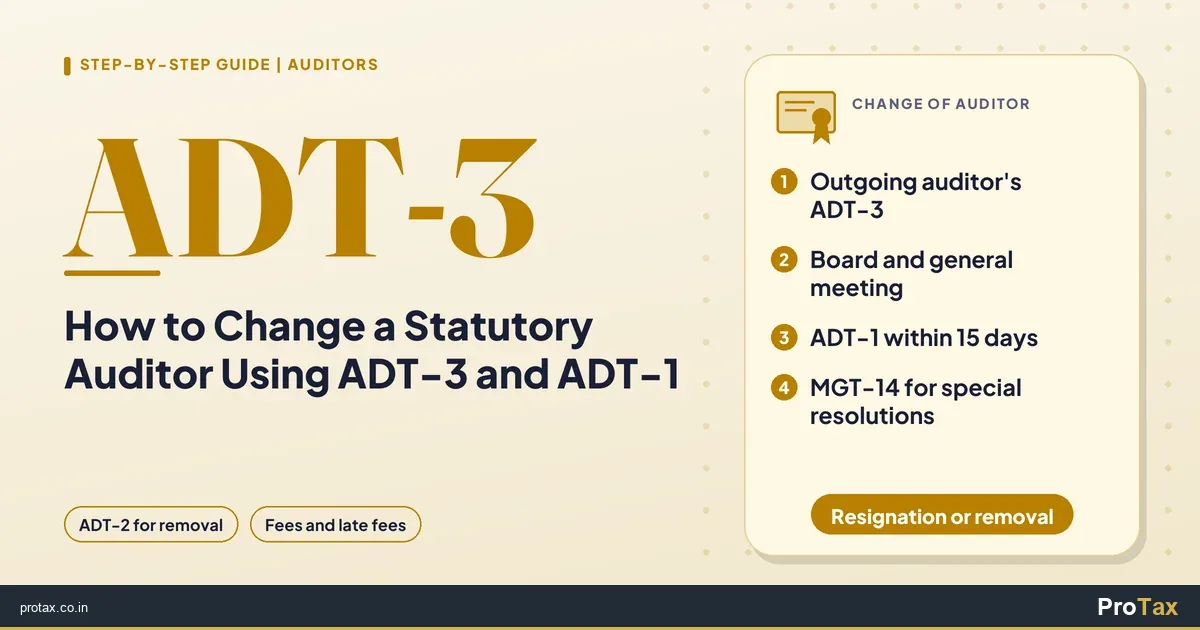
| Suit against the Government or a public officer | Section 80, Code of Civil Procedure 1908 | Two months' written notice stating the cause of action, the relief and the plaintiff's name and address, delivered to the office the section names. Urgent relief may be sought with the court's leave under Section 80(2), but no relief is granted without hearing the Government. |
| Ending a lease with no fixed term | Section 106, Transfer of Property Act 1882 | Fifteen days' notice for a month-to-month lease, six months' for a year-to-year lease of agricultural or manufacturing purposes, in writing, signed and served on the other party. State rent control laws override this for premises they cover. |
| Unpaid operational debt of a company | Section 8, Insolvency and Bankruptcy Code 2016 | Demand notice in Form 3 or 4 of the Adjudicating Authority Rules. The corporate debtor has 10 days to pay or to point to a pre-existing dispute. Only then may the operational creditor apply under Section 9. |
| Invoking arbitration | Section 21, Arbitration and Conciliation Act 1996 | Arbitral proceedings commence on the date the respondent receives the request to refer the dispute to arbitration, unless the clause says otherwise. The notice fixes limitation for the claims it describes. |
| Consumer complaint | Consumer Protection Act 2019 | No notice is prescribed before a complaint to the District, State or National Commission. A notice is still usual, because it documents the deficiency and the opportunity to cure. |
Dismissal for a missing notice
A suit against the Government filed without the Section 80 notice, or a cheque complaint filed before the 15 days have run, is not cured by a later notice. The filing itself is premature and the court has no discretion to overlook the defect, although a fresh and timely proceeding may still be possible within limitation.
Related topics
The statute, rules and portals the page relies on. Check them before acting: fees, forms and time limits change by notification.
- Parties. Full name and address of the sender and of each recipient, and the capacity in which each acts (proprietor, director, landlord, payee).
- Facts in sequence. Dates, amounts, invoice or cheque numbers, agreements and the events that gave rise to the grievance, without argument.
- Legal basis. The statute and section, or the contract clause, that makes the conduct wrongful. In a Section 138 notice, the cheque details and the return memo date are essential.
- The demand. Exactly what is required: payment of a stated sum, possession, performance, withdrawal of a mark, a public apology. Vague demands weaken later proceedings.
- The period. A clear number of days from receipt, equal to or longer than any statutory minimum.
- The consequence. The proceeding that will follow, named accurately: a complaint under Section 138, a civil suit for recovery, a petition under Section 9 IBC.
- Date, signature and mode. The date of dispatch, the signature of the sender or advocate, the enclosures listed, and a statement that a copy is retained.
- Reservation of rights. A line that the notice is without prejudice to other remedies, so that nothing in it is read as an election or a waiver.
Tone and length
A notice is read first by the recipient and later by a judge. Short declarative sentences, one fact per sentence and a demand that can be met without further explanation serve both readers. Threats beyond the law, abuse or defamatory statements expose the sender to a counter-claim.
Related topics
The statute, rules and portals the page relies on. Check them before acting: fees, forms and time limits change by notification.
| Mode | Proof retained | Notes |
|---|---|---|
| Registered Post with Acknowledgement Due | Postal receipt, tracking record, signed acknowledgement card | Section 27 of the General Clauses Act 1897 presumes service when a letter is correctly addressed, prepaid and posted by registered post. Refusal or "unclaimed" is treated as service for Section 138 purposes (C.C. Alavi Haji v. Palapetty Muhammed, Supreme Court, 2007). |
| Speed Post | Receipt and India Post tracking printout | Accepted by courts alongside registered post; tracking shows the delivery date, which starts the recipient's period. |
| Courier | Consignment note and proof of delivery | Acceptable, but the presumption in Section 27 attaches to post. Many senders use courier in addition to registered post, never instead of it. |
| Sent copy with headers, delivery and read receipts | Admissible with the certificate the Bharatiya Sakshya Adhiniyam 2023 requires for electronic records (Section 63). Best used alongside a postal mode unless the contract names email for notices. | |
| Hand delivery | Signed and dated acknowledgement on a copy | Clean proof when the recipient signs; worthless when they do not. |
Address accuracy decides most service disputes. For a company, the registered office shown on the MCA portal is the address to use, and for an individual the last known residential or business address. Where more than one address is known, send to each. Keep the original postal receipts, the tracking printouts and the returned envelopes unopened: an envelope returned "left" or "refused" is itself evidence.
Related topics
The statute, rules and portals the page relies on. Check them before acting: fees, forms and time limits change by notification.
Record the date of receipt
Every period in the notice and in the statute runs from this date. Keep the envelope and note the tracking number.
Separate facts from assertions
List each allegation, mark it admitted, denied or partly correct, and gather the document that supports the position on each.
Check the notice itself
Was it sent within the statutory period, to the correct person, by an accepted mode, with the demand the statute requires? A defective notice is a defence, not a reason to ignore the letter.
Reply point by point
Deny what is untrue with the reason, admit what is true without embellishment, raise any pre-existing dispute (decisive under Section 8 IBC) and state any counter-demand. Avoid admissions made in the hope of settlement unless the letter is marked for that purpose.
Serve the reply the same way
Registered post with acknowledgement due, within the period given, with a copy retained. The reply becomes part of the record of the dispute.
Preserve evidence
Agreements, invoices, bank statements, correspondence and messages relevant to the claim should be secured now, because the next step may be a filing.
Cheque notices are different
Under Section 138 the offence is complete when the 15 days pass without payment. Paying the cheque amount within the period ends the matter; a reply disputing the debt does not stop the complaint, although the defence remains available at trial. The punishment on conviction is imprisonment up to two years, or a fine up to twice the cheque amount, or both.
Related topics
The statute, rules and portals the page relies on. Check them before acting: fees, forms and time limits change by notification.
| Claim | Forum | Governing law |
|---|---|---|
| Recovery of money, breach of contract | Civil court of competent pecuniary and territorial jurisdiction; Commercial Court for commercial disputes above the specified value | Code of Civil Procedure 1908; Commercial Courts Act 2015 (which also requires pre-institution mediation under Section 12A unless urgent relief is sought) |
| Dishonoured cheque | Judicial Magistrate of the First Class where the payee's bank branch is located | Sections 138 to 142, Negotiable Instruments Act 1881 |
| Unpaid operational debt of a company | National Company Law Tribunal having jurisdiction over the registered office | Sections 8 and 9, Insolvency and Bankruptcy Code 2016 |
| Deficient goods or services | District, State or National Consumer Disputes Redressal Commission by value | Consumer Protection Act 2019 |
| Dispute under a contract with an arbitration clause | Arbitral tribunal; courts only for interim measures and challenges | Arbitration and Conciliation Act 1996 |
| Possession of leased premises | Civil court, or the Rent Controller or Rent Court where a state rent law applies | Transfer of Property Act 1882 and the relevant state rent control statute |
Limitation runs regardless of the notice. Money claims and most contract claims must be filed within three years of the cause of action under the Limitation Act 1963, and a notice does not reset that period. The one systematic exception is Section 15(2) of the Limitation Act, which excludes the period of a notice the law requires before suit, such as the two months under Section 80 CPC.
Related topics
The statute, rules and portals the page relies on. Check them before acting: fees, forms and time limits change by notification.
Recovery of money
Unpaid invoices, loans between individuals, security deposits. Cites the contract and the Indian Contract Act 1872; claims interest under the Interest Act 1978 or the contract.
Cheque dishonour
Strict 30-day and 15-day periods, cheque and return memo details, demand for the exact cheque amount. The most litigated notice in the country.
Landlord and tenant
Termination of tenancy, arrears of rent, recovery of possession. Section 106 TPA unless a state rent law applies.
Consumer grievance
Defective goods, deficient service, unfair trade practice. Documents the complaint and the time given to remedy it before the Commission is approached.
Employment
Unpaid salary or dues, wrongful termination, breach of restrictive covenants. Cites the appointment letter and the applicable labour statute.
Intellectual property
Infringement of a trademark, copyright or design, demanding that use stop and accounts be rendered. Covered in detail on the trademark infringement notice page.
Defamation
Demand for withdrawal and apology for a false statement, with the civil and criminal consequences stated. Truth and fair comment are the usual defences raised in reply.
Operational debt of a company
Form 3 or Form 4 demand under Section 8 IBC, where the debtor's only answers are payment or proof of a dispute that existed before the notice.
Breach of contract
Non-performance, defective performance or termination. Names the clause breached, the cure period the contract allows and the remedy sought.
Related topics
- Cause of action
- The bundle of facts that gives a person the right to sue. Limitation periods are counted from the date it arises, and a notice should state it plainly.
- Acknowledgement due (AD)
- The card returned to the sender by India Post with the recipient's signature and the date of delivery; the standard proof of service of a notice.
- Deemed service
- The legal presumption that a correctly addressed registered letter was delivered, under Section 27 of the General Clauses Act 1897, including where it is refused or returned unclaimed.
- Return memo
- The bank's memo recording that a cheque was dishonoured and the reason. The 30-day period for a Section 138 demand runs from its receipt.
- Without prejudice
- A marking on settlement correspondence so that offers made in it cannot be used as admissions. It belongs on negotiation letters, not on the notice itself.
- Limitation
- The time within which a proceeding must be filed under the Limitation Act 1963. A notice does not pause or extend it, except for notices the law itself requires.
- Pre-institution mediation
- The mandatory mediation under Section 12A of the Commercial Courts Act 2015 before a commercial suit that seeks no urgent interim relief; the notice usually precedes it.
Related topics
Related topics
The statute, rules and portals the page relies on. Check them before acting: fees, forms and time limits change by notification.
- Negotiable Instruments Act, 1881 (Sections 138 to 142), India Code
- Code of Civil Procedure, 1908 (Section 80), India Code
- Transfer of Property Act, 1882 (Section 106), India Code
- Insolvency and Bankruptcy Code, 2016 (Sections 8 and 9), India Code
- General Clauses Act, 1897 (Section 27), India Code
- Limitation Act, 1963, India Code
- Advocates Act, 1961, India Code
- India Post: Registered Post and Speed Post